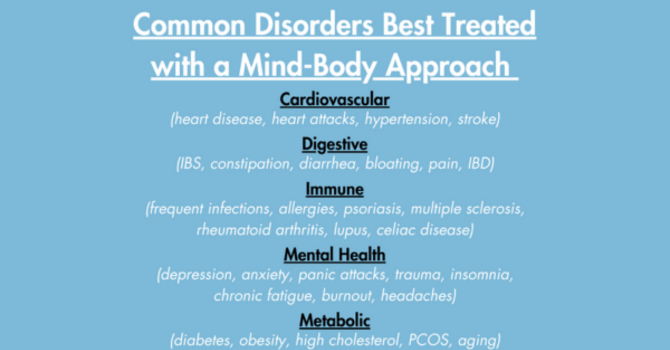
Adverse Childhood Experiences (ACEs) have been thoroughly studied since Felliti et al.’s landmark study of 17k people in 1998. These are experiences that are potentially traumatic/stressful that occurred before age 18. ACEs increase the risk of many mind-body disorders such as cardiovascular, respiratory, autoimmune, gastrointestinal diseases, cancer, diabetes, obesity, chronic pain, and mental illness, as well as unhealthy behaviours like substance abuse. The more ACEs someone has, the higher the risk. People with 4+ ACEs are significantly more likely to develop mind-body disorders compared to people with 0 ACEs, and people with 6+ ACEs have a 20-year lower life expectancy! I wrote about how chronic stress disrupts the nervous system and influences health in an earlier post – for many people, it starts in childhood.

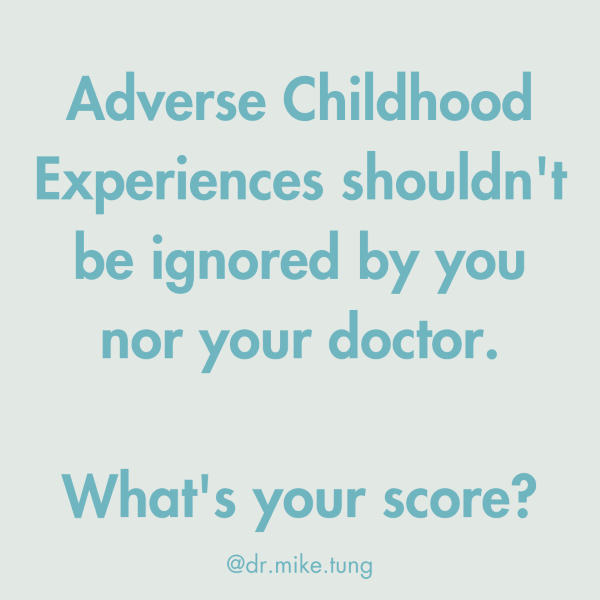
These findings have been replicated globally, and researchers report that up to 2/3 of adults had at least 1 ACE! With such a high prevalence, no wonder so many people struggle with stubborn chronic health conditions. Since we know the downstream consequences of ACEs, doctors shouldn’t ignore them, especially since they’re often the only person who people talk to about their health, and are usually the gatekeepers for referrals.
So why don’t most doctors ask about ACEs? It’s probably because they’re not educated about them, they’re unsure about how to integrate them into their workflow, and/or they lack the confidence to bring up trauma. I see all of these as reflections of a broken healthcare system, but that’s not what this post is about. When doctors are educated about how ACEs can increase the risk of physical diseases later in life, they are more likely to ask about them. A few studies also found that administering the ACE questionnaire lengthened almost all visits by no more than 5 minutes. Furthermore, once doctors started integrating ACEs into their visits, they realized the value of spending this extra 5 minutes. For doctors who are nervous about discussing trauma - you don’t have to go deep. In fact, you shouldn’t. All you need to do is listen, show empathy, normalize their experience to minimize stigma, refer to professionals who can directly address their ACEs, and keep a strong rapport with them so they feel supported by you.
Ultimately, conversations about ACEs should seek to identify people who need more support, provide those people with support, reduce the stigma of talking about trauma, and prevent ACEs at the public health level. Part of the power trauma holds over us as individuals and as a society comes from the secrecy with which we handle it. Most of us have at least 1 ACE, so it’s a “normal” experience which affects people differently. By acknowledging what happened to you and understanding how it may have affected you, I hope you can feel empowered to get the help you need.
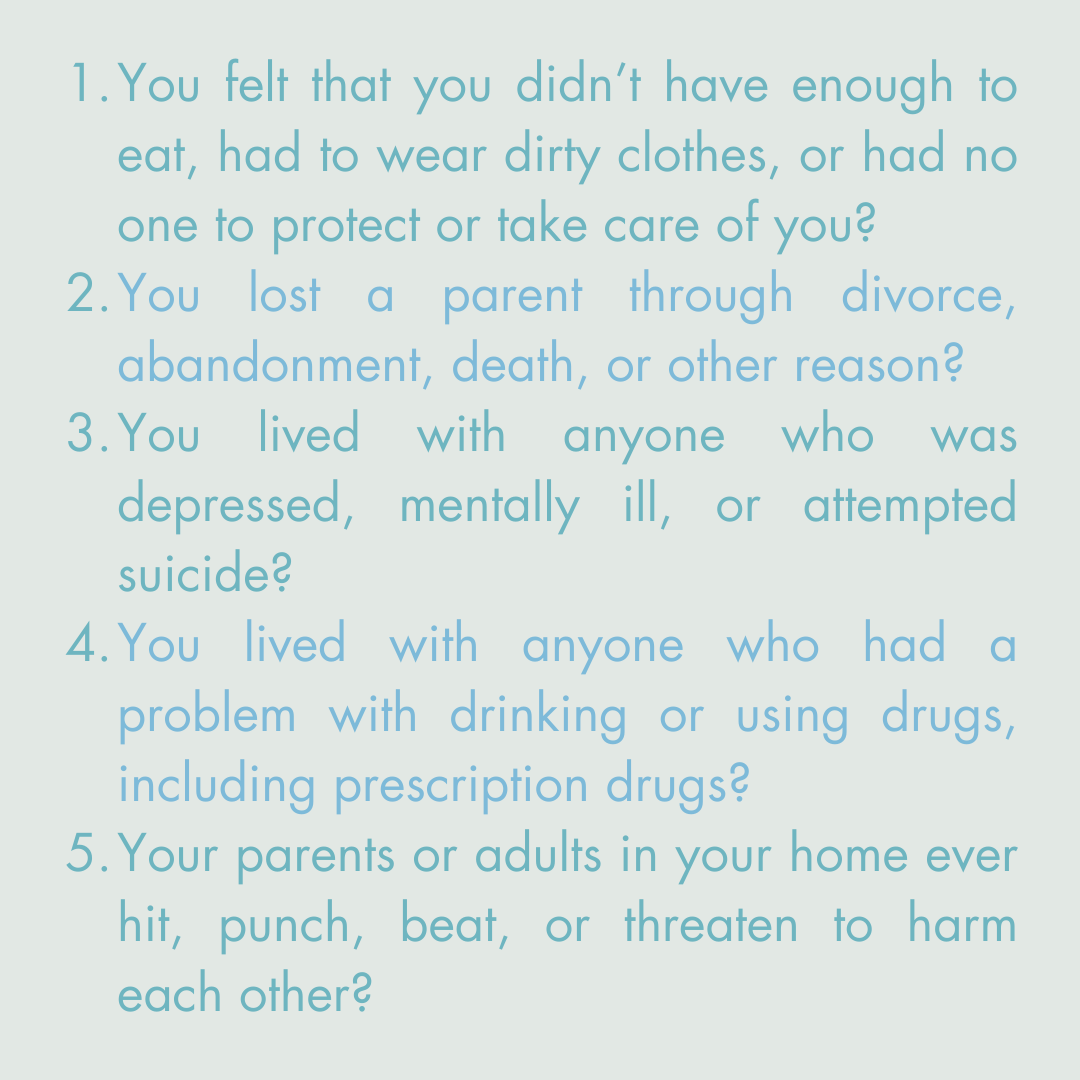
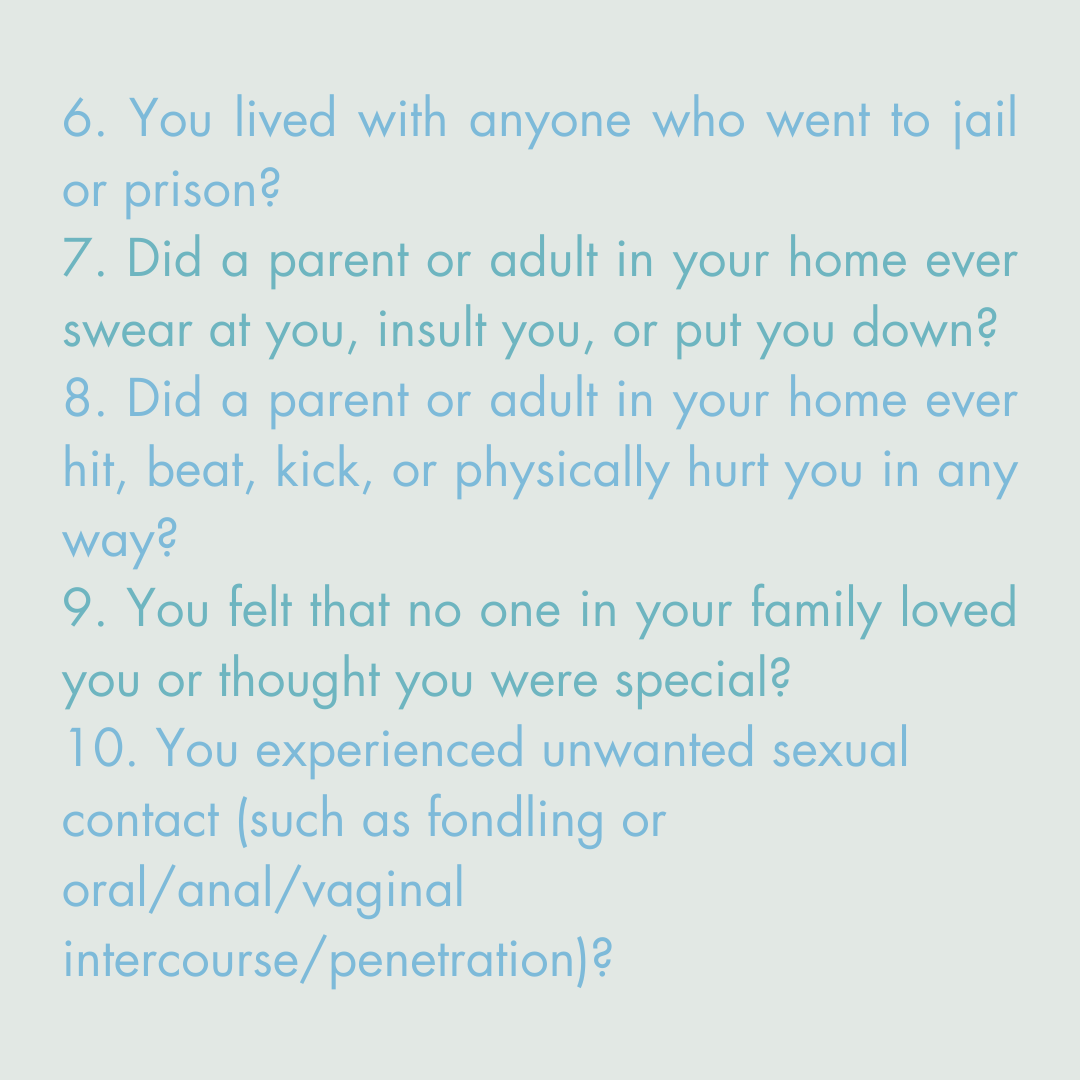
The Adverse Childhood Experience Questionnaire for Adults

If you have any questions, please send me a message through my contact form, social media, or by booking a free consultation. If you’d like to stay updated on future content, please sign up for my newsletter and/or follow me on social media .
In health,

References
Relationship of childhood abuse and household dysfunction to many of the leading causes of death in adults. The Adverse Childhood Experiences (ACE) Study
https://pubmed.ncbi.nlm.nih.gov/9635069/
Adverse Childhood Experiences, Outcomes, and Interventions
https://pubmed.ncbi.nlm.nih.gov/32122559/
Adverse Childhood Experiences (ACEs) Interventions to Prevent and Mitigate the Impact of ACEs in Canada
https://www.publichealthontario.ca/-/media/documents/a/2020/adverse-childhood-experiences-report.pdf
Screening for adverse childhood experiences in preventive medicine settings: a scoping review
https://link.springer.com/article/10.1007/s10389-021-01548-4

Dr. Mike Tung, ND, BScH
Contact Me